The Ethical Lens: Unpacking the Dancing AI Baby Trend Beyond the Cuteness
17 March 2026
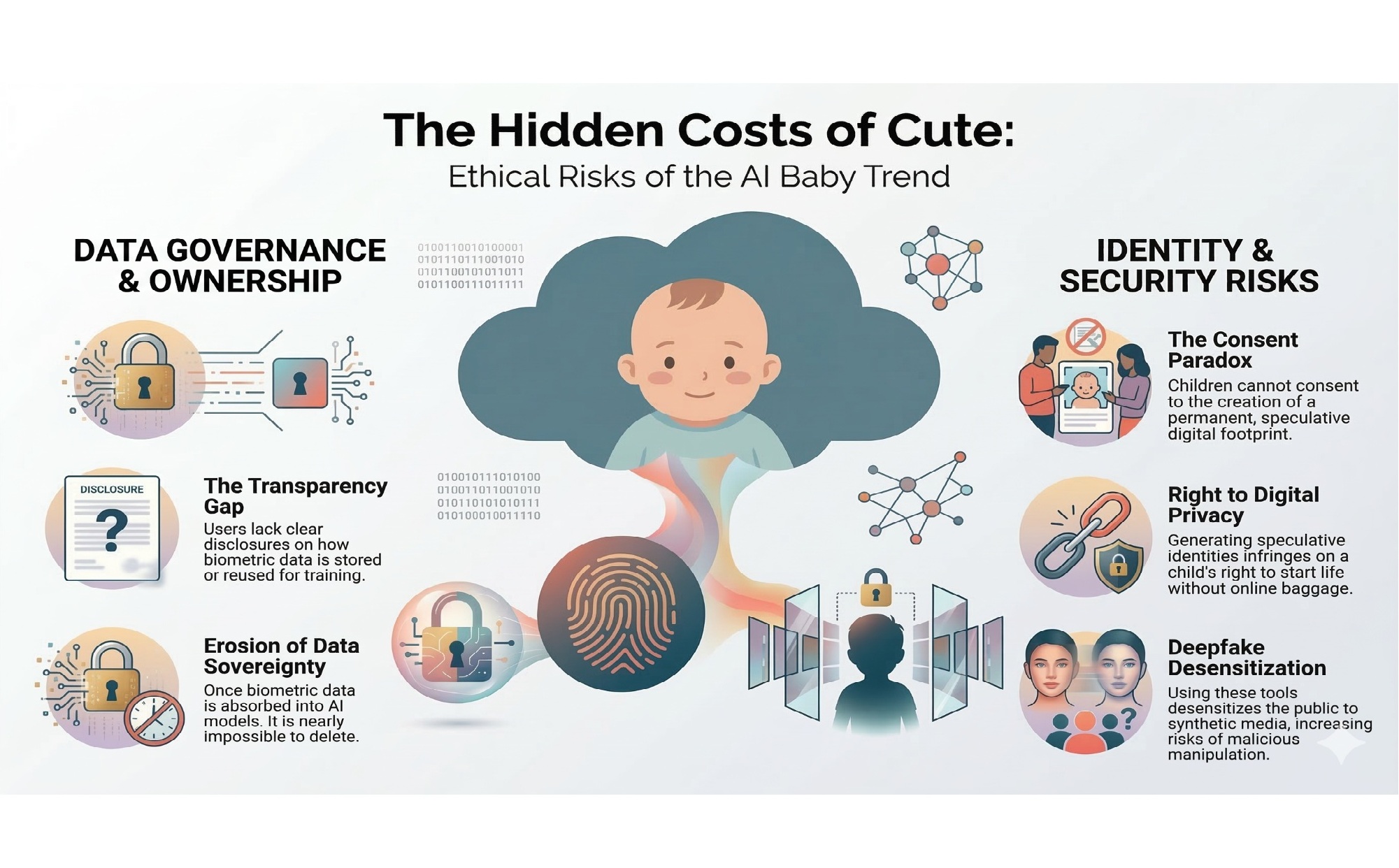
The recent trend of “AI babies” flooding social media feeds may seem harmless, even heartwarming. But beneath the viral trend lies a serious ethical conversation we cannot afford to ignore. AI-generated baby images are often created from couples’ photos to predict what a future child might look like. Some users also upload their real babies’ pictures into these generators to create viral dance trends. At its core, the trend highlights critical questions around data sovereignty and consent. Many of these generators require uploading high-resolution personal photos, often without transparent policies on how this biometric data is stored, used for model training, or secured in the long term. When people generate a child’s likeness, they are creating a digital identity that cannot consent and cannot be easily erased within AI.
- Transparency matters
Users deserve to know how their images are processed, stored, and potentially reused. Are these photos being used to further train models? Are they stored securely? Ethical AI requires clear, accessible disclosures and not buried legal language. There must be transparent data practices and clear policies on data usage, storage, and deletion. Mandatory AI disclosures, including labeling AI-generated content, are also required to avoid misleading information.
- Data sovereignty
When people upload biometric data such as facial features and voice into AI systems, they must consider whether they retain control over such digital identities. We must ask ourselves these questions: Who owns that data? Where is it stored? Which jurisdiction governs it? Who controls any transfer of such data? The European Union’s General Data Protection Regulation (GDPRVerordnung (EU) 2016/679 — die Datenschutz-GrundverordnungDie Datenschutz-Grundverordnung der EU. Neben Rechtsgrundlage, Zweckbindung und Betroffenenrechten knüpft Artikel 35 eine Datenschutz-Folgenabschätzung an Verarbeitungen, die voraussichtlich ein hohes Risiko zur Folge haben — die Vorschrift, der ein KI-Vorhaben am häufigsten begegnet und die sich mit einer Risikobewertung nach der KI-Verordnung überschneidet, ohne dasselbe Dokument zu sein.Gilt fürAlle Verantwortlichen und Auftragsverarbeiter, die personenbezogene Daten von Personen in der EU verarbeiten.Zum Quelltext des Rechtsakts (öffnet in einem neuen Tab)Allgemeine Informationen zum genannten Rechtsakt, keine Rechtsberatung.) recognizes that where a person no longer wishes that their information to be publicly available, they could request its deletion. However, in an era where AI continuously scrapes, processes, and repurposes vast amounts of data, deletion is not so straightforward. Once personal data has been absorbed into a large language model (LLM), it becomes significantly more difficult to remove the data, and such data can never be truly be erased from the AI system.
- The consent paradox
AI-generated “baby” may be fictional but represents a potential real human. Children cannot consent to having their likeness imagined, generated, shared, or commercialized. Creating and posting these images constructs a digital footprint for someone who has no voice in the matter.
- Right to digital privacy
Every child deserves the right to enter the world without a pre-built digital identity. In an era where online presence increasingly shapes opportunity, reputation, and privacy, we should consider whether generating speculative identities infringes on that right.
- Manipulation of data and deepfakes
Technologies manipulate digital media using face-swapping or voice cloning that pose severe risks for misinformation and undermine trust in media and security systems. These very technologies powering these “cute” images are the same ones used for malicious deepfakes. Proliferating AI baby content can desensitize the public to synthetic media, making it harder to discern reality from fabricated and manipulated context in more critical contexts.
Ethical AI is not just about compliance; it’s about foresight, dignity, and responsibility. Trends move fast. Values must move faster. Innovation without guardrails erodes trust. This AI baby trend is a potent case study urging us to consider the long-term societal impacts of technological advancements. Alleina AI is a governance platform that continuously monitors AI systems for security risks, regulatory compliance and bias. Alleina AI generates audit-ready documentation and provides real-time explainability, reducing compliance costs while ensuring businesses stay innovative and compliant with evolving regulations.
Author: Karyn Samuella Ewurakua Sawyerr
Role: Chief Legal Officer/Co-founder, Alleina AI